PLASTIC BAGS

Pascale Marthine Tayou

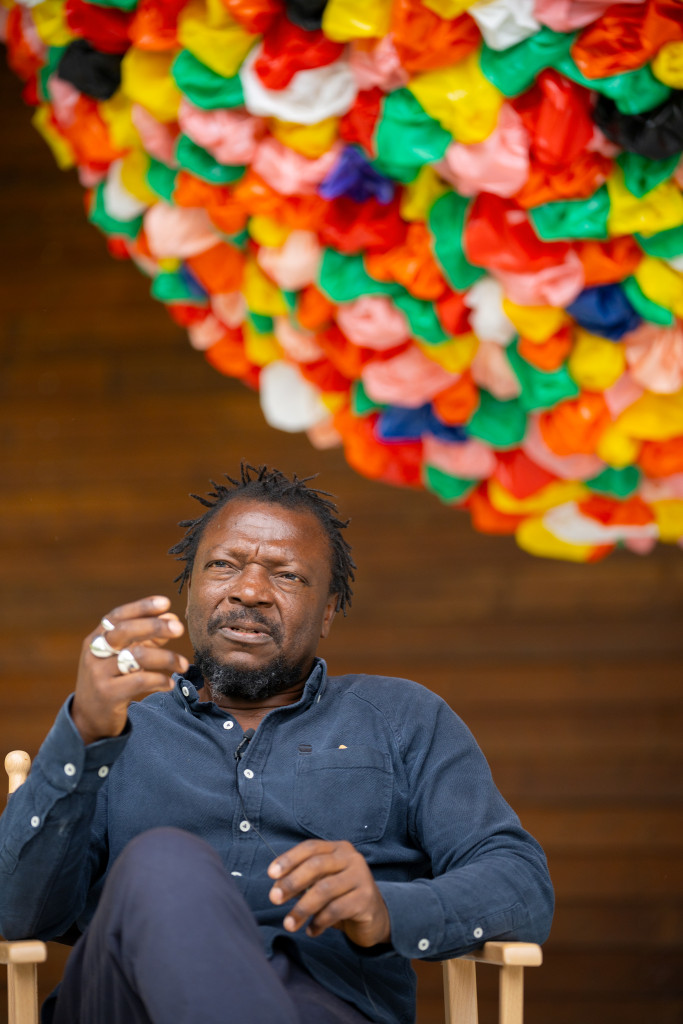
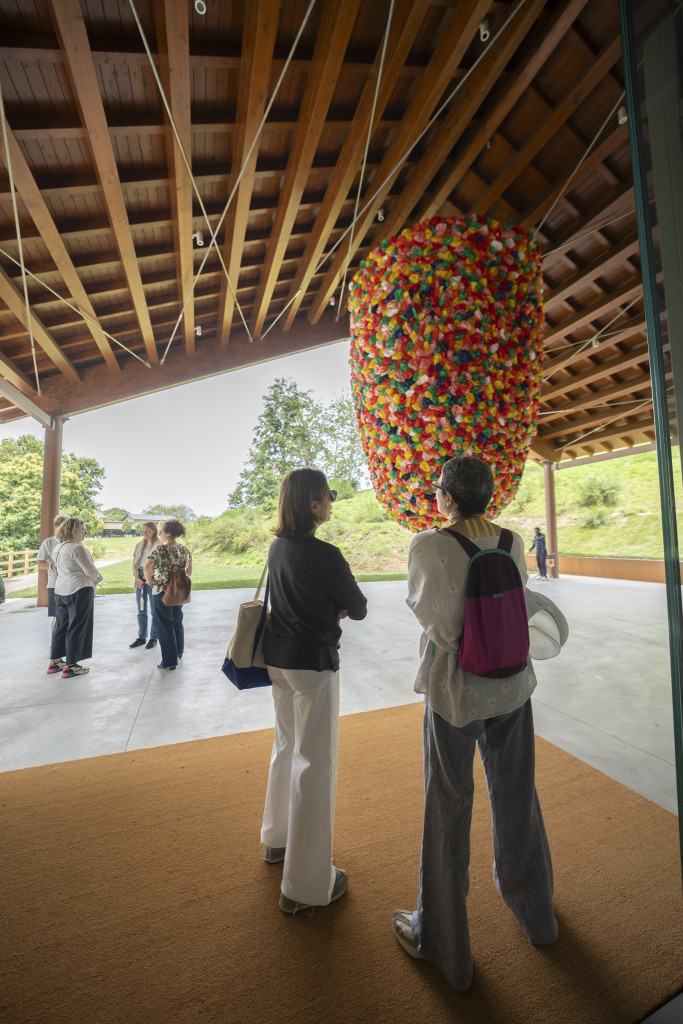
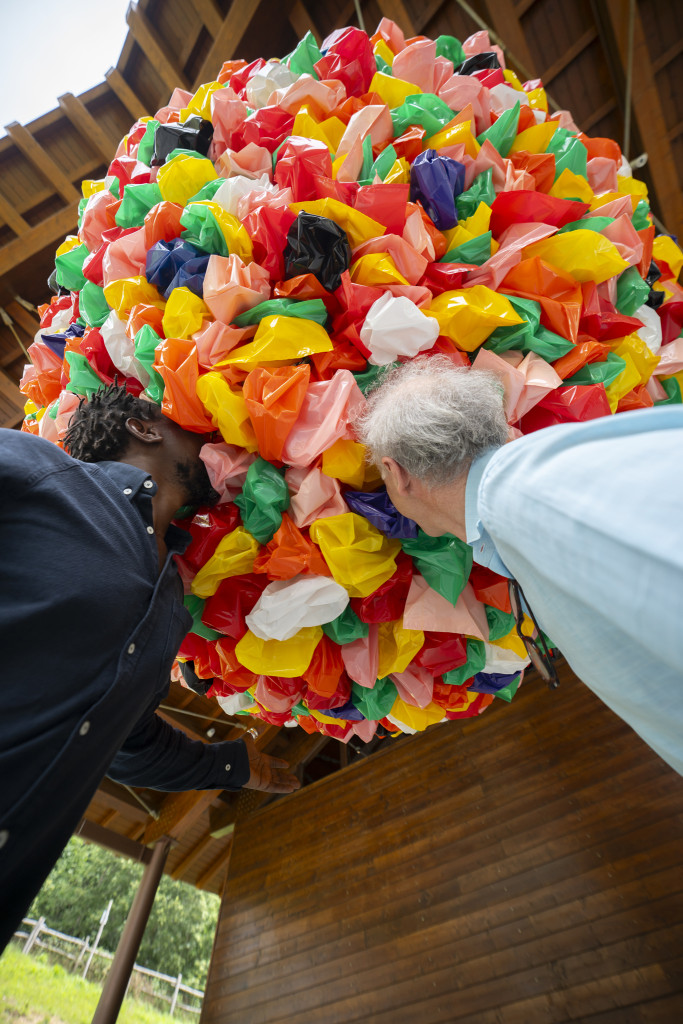
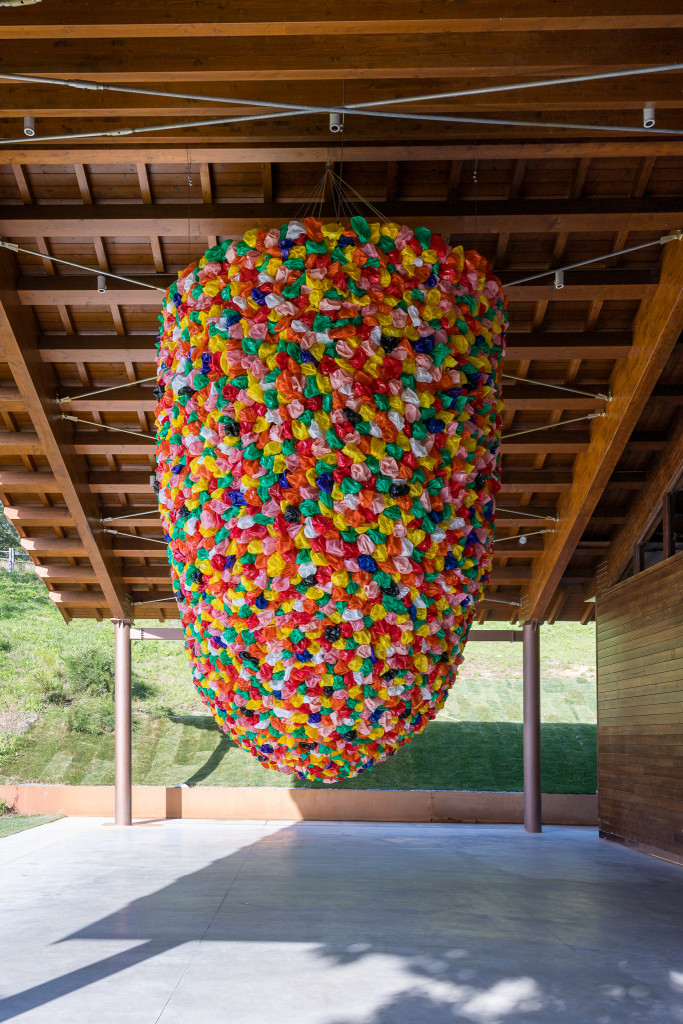
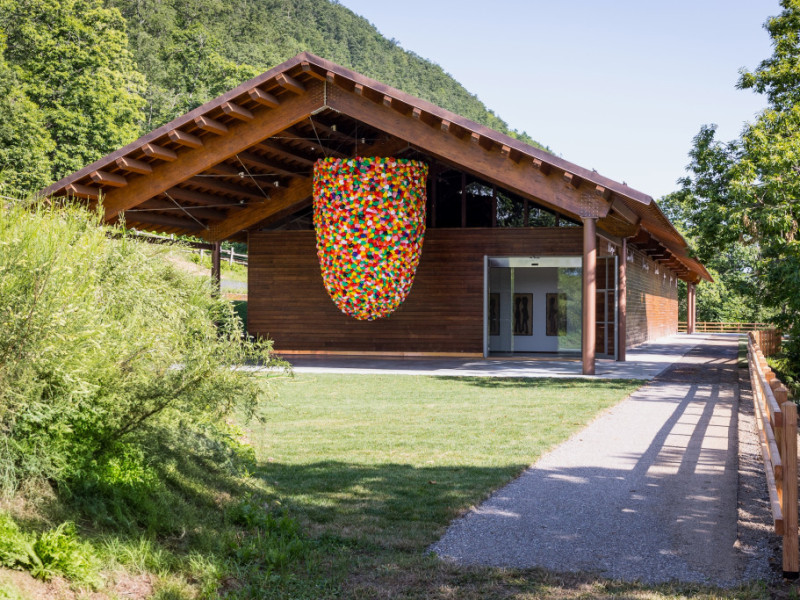
“Plastic Bags” by the Cameroonian artist Pascale Marthine Tayou is the work from which everything begins, the first stop along OCA’s artistic path. A monumental work, it became part of the permanent collection last year, following the solo exhibition dedicated to the artist within the exhibition space.

Here, the narrative proceeds from the world, understood in its geographical dimension as something “other” than ourselves, before arriving at an introspection on who we are and on the network of relationships we build with nature. These brightly coloured plastic bags constitute a heartfelt denunciation of the destination of the waste generated by Western hyper-production, inviting us to reflect not only on the relationship between human beings and the environment, but also on the relationships between different regions of the world.
Artist biography

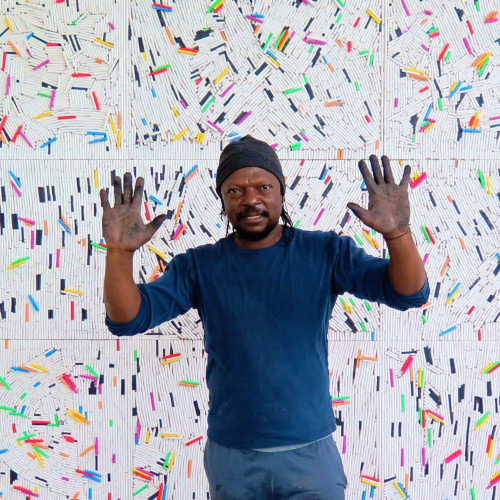
Born in Nkongsamba, Cameroon, in 1966, Tayou lives and works in Ghent, Belgium, and in Yaoundé, Cameroon. Since the early 1990s, and following his participation in Documenta 11 in Kassel (2002) and the Venice Biennale (2005 and 2009), Pascale Marthine Tayou has become known to a wide international audience. His work is characterized by its variability, as it is not limited to a single medium or to a specific set of themes. Although his themes may differ, they all take the artist himself, as a person, as their starting point.

His works not only mediate between cultures, or place human beings and nature in an ambivalent relationship with one another, but are also produced with the awareness that they are social, cultural or political constructions. His work is deliberately mobile, elusive of preconceived schemes, and heterogeneous. It is always closely linked to the idea of travel and of contact with what is other than oneself, and is so spontaneous that it almost appears accidental. The objects, sculptures, installations, drawings and videos produced by Tayou share a recurring feature: they focus on an individual moving through the world and exploring the question of the global village. It is within this context that Tayou negotiates his African origins and the expectations associated with them.

Come raggiungerci

SUBSCRIBE TO NEWSLETTER